Sunday, 16 February 2014

Ten Top TV Trials of the Modern Era in America

The OJ Simpson Murder Trial
Dubbed the case that changed modern courtroom coverage, over a 100 million people tuned in on October 3, 1995, to watch Simpson receive an acquittal verdict for the murders of Nicole Brown Simpson and Ronald Goldman. It was the trial that Lawyer Jonnie Cochran coined the phrase, “If the glove don’t fit, you must acquit.” 
The Menendez Brothers

In 1993, in one of Court TV’s first high-profile broadcasts, millions of viewers tuned in to the t trial of Erik and Lyle Menendez for the shotgun slayings of their parents. On January 13, 1994, after jurors could not agree on a manslaughter or first-degree sentence, the judge ordered a mistrial. The second trial, however, returned a guilty verdict for both brothers for murder in the first-degree and two consecutive life-in-prison terms.


Jeffrey Dahmer

Over 60 news organizations from around the world, including Britain, France and Australia were present for the February 17, 1992, verdict of serial killer and cannibal Jeffrey Dahmer. He was found sane and guilty on 15 counts of murder and sentenced to 957 years in prison. Dahmer was later murdered in prison by another inmate.


Aileen Wuornos

On January 27, 1992, Wuornos was found guilty of first-degree murder for the murder of truck driver Richard Mallory, and was sentenced to the death in the electric chair. As she was led out of the courtroom after the verdict, Wuornos shouted, “I’m innocent! I was raped! I hope you get raped! Scumbags of America!” Charlize Theron later starred in the movie Monster, based on the Wuornos case.

Rodney King

The not-guilty verdict for King’s beating case against the LAPD was broadcast April 29, 1992, and immediately incited riots around South Central Los Angeles. In the end, 54 people died and over 7,000 fires had been set. The riots prompted King to go on television and utter the famous phrase, “Can’t we all just get along?”

Anna Nicole Smith Custody Trial

Causing months of fodder for Nancy Grace, the custody hearing for Smith’s daughter Dannielynn after the model died of a drug overdose in 2007 sparked national interest. Ex-boyfriend Larry Birkhead was found to be the father on April 11, 2007 after both he and Smith’s boyfriend at the time of her death, Howard K. Stern, took paternity tests.


Ted Bundy

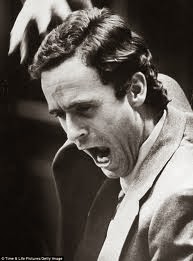
Bundy’s trial holds the distinction of being the first to be televised nationally. Dubbed the Chi Omega murder case because of his brutal attacks on four of the Florida State University sorority’s members, it was covered by 250 reporters from five continents in 1979. Bundy, who later confessed to committing at least 30 homicides from 1974-1978, was convicted of three death sentences in two separate trials and executed in the electric chair in 1989.

Casey Anthony

Ratings have yet to be released, but Anthony’s July 5th verdict stands to be one of the most widely viewed in recent history. CNN’s website reported a 30 percent spike in traffic with 1.9 million viewers tuning in to its live video stream from the courtroom. Despite overwhelming public opinion that she killed her two-year-old daughter, Caylee Marie Anthony, Casey Anthony was found not guilty for all three counts: first-degree murder, aggravated child Abuse, and aggravated manslaughter of a child. She was convicted of counts 4, 5, 6, and 7: Providing False Information to Law Enforcement (two convictions were thrown out in January 2013). Labeled “Tot Mom” by Nancy Grace, Anthony was released soon after on time served and has recently filed for bankruptcy.


Robert Chambers

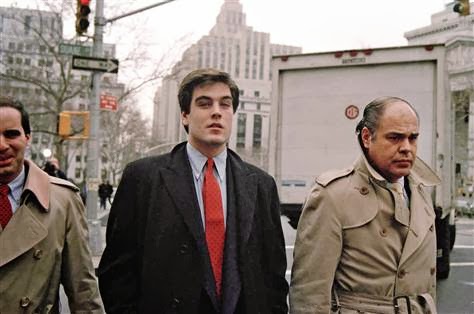
Nicknamed the “Preppie Killer” by the media, Robert Chambers pled guilty to manslaughterin the death of 18-year-old Jennifer Levin. The two left a bar together and were getting hot and heavy in New York’s Central Parkduring the early morning hours of August 26, 1986.Chambers’ defense was that Levin’s death had occurred during “rough sex.” With the jury deadlocked for nine days, a plea Bargain was struck in which Chambers pleaded guilty to the lesser crime of manslaughterin the first degree, and to one count of burglaryfor his thefts in 1986. He was sentenced to serve 5 to 15 years, with the sentence for burglary being served concurrently.

Jodi Arias

Arias gave several different accounts about her involvement in her on-again off-again boyfriend’s (Travis Alexander) death, including that she was not there during the time of the murder and that two intruders had broken into Alexander's home, murdering him and attacking her. Two years after her arrest, however, Arias told police that she killed Alexander in self-defense, claiming that she had been a victim of domestic violence. In a bizarre and salacious trial, Jodi Arias was convicted of first-degree murder that gained international attention over several months. Alexander sustained multiple stab wounds, a slit throat, and a gunshot to the head. Arias is still waiting for sentencing, which is scheduled to occur on March 17, 2014.

Saturday, 1 February 2014

Amanda Knox’s Conviction is Upheld


After a long wait the Italian Supreme Court’s verdict in the Amanda Knox, Raffaele Sollecito case was finally revealed on Thursday: guilty. The judges in Florence overruled her previous acquittal and sentence her to 28 years and 6 months in prison, while Knox’s ex-boyfriend, Raffaele Sollecito, was also found guilty and given 25 years in jail. But their lawyers vowed to appeal to Italy’s highest court—a process that will take at least a year and drag out this legal saga even further. 


Yet, not surprisingly, Knox has still managed to garner support from the American media, who by and large still believe that she is an innocent girl being played by a corrupt and antiquated Italian justice system. Knox’s PR machine (The Marriott Group) and the legion of Knox apologists still gawk at those, like myself, who believe that Knox is nothing more than a murderer, master manipulator, and worthy of an Academy Award for her brilliant acting job for duping almost an entire nation. 


Speaking on ABC's Good Morning America, Knox vowed yesterday to fight her conviction “until the very end” and said she “will never willingly go back to Italy.” And of course a new CNN article paints Knox as a hero, when in fact her statement “fight to the very end” actually means hide in the United States until her final appeal comes back guilty as well, and then continue hiding for the rest of her life (i.e. the very end). 

Knox’s great acting has also been aided by a carefully plotted effort to make her appear compassionate and thoughtful. Knox’s image has gone through a complete overhaul since she has entered the spotlight several years ago. She entered the Good Morning America studio yesterday looking groomed and glamorous, with her new short bob haircut and in studio make-up.  Her interviewer, Robin Roberts, kindly held Knox’s hand and plugged her book, saying readers would “really learn more about Amanda Knox” from her book.  

But everyone who came in contact with Knox just after the murder of Meredith Kercher expressed their certainty that Knox was the killer and that her actions were beyond just her quirky attitude or her “different” way of dealing with tragedy. 

According to one female Italian Prison guard, Angela Antonietti, Amanda Knox “is a brilliant actress; she is the Ice Maiden; she has reinvented herself as a teary American TV star, but she was cold and unemotional when in an Italian jail.” According to Angela, an admitted favorite guard of Knox’s while being held at Capanne prison, near Perugia, Knox never cried or showed remorse during her time inside. Continuing, Angela revealed her thoughts that “Underneath the veneers she [Knox] remains the same controlled woman I knew well in Capanne prison. She was so composed, I never saw her suffering.” Ms Antonietti, who worked as a prison warden for 25 years, said she came to dislike Knox immensely during her time at the prison, saying “Her behavior wasn’t human. Even the doctor didn’t understand her.”


Meanwhile, Raffaele Sollecito had left Italy and drove to Austria while an appeals court deliberated his fate. Sollecito’s lawyer, Luca Maori, insisted that his client was in the area of Italy’s northeastern border with Austria on Thursday because that’s where his current girlfriend lives. He said Sollecito went voluntarily to police to surrender his passport and ID papers. However, head of the Udine police squad, Massimiliano Ortolan, said police were tipped off that Sollecito had checked into a hotel in Venzone (Carnia hotel), on the Italian side of the border, and they went to find him there, waking him and his girlfriend up Friday morning and bringing him to the police station in Udine. No arrest warrant had been issued by the Florence court. But the court demanded that Sollecito turn over his passport and ID papers to prevent him from leaving the country.

Alan Dershowitz weighs in on Knox case:

Dershowitz: "Lots of evidence against Knox"


Monday, 20 January 2014

Determining Postmortem Interval: Forensic Entomology


Investigating murders incorporates a host of different forensic professionals, all scientifically collaborating in an effort to corroborate their findings. Forensic entomology combines the study of insects and other arthropods with criminal investigations. In the case of a forensic entomologist; their job, when investigating a homicide, is to help determine the postmortem interval (or time elapsed since death; PMI) of a corpse based on the age of the insects present in the body. To do so, they must first identify the species of the insect. Each species of insect may have vastly different habits, behaviors, and growth rates.

Forensic entomologists must consider the time it takes for each species of fly to reach the body and the rate of development for each species. For instance, some species lay eggs in an outdoor environment and some lay eggs in an indoor environment. Therefore, if a corpse is recovered indoors and has eggs or larvae of flies that typically inhabit sunny outdoor locations, this would indicate that the body was moved. Once the entomologist determined the “Time Since Colonization (TSC),” they can determine the PMI. 

These professionals use a variety of different techniques, such as species succession, larva weight, larva length, and others to determine the TSC. In any event, it also beneficial to have a forensic pathologist, a medical examiner, or coroner to estimate the PMI and the forensic entomologist may assist them if necessary. Combining the analysis of all of these specialists is not only necessary; it also narrows the margin for error, providing several scientific explanations for the same process. The more scientific results that are accumulated; the more valid the results become. In some cases, however, a forensic entomologist is not only the best way, but sometime the only way to determine the PMI. Dr. Gail Anderson, a forensic entomologist at Simon Fraser University in Vancouver, Canada, suggests that “after three days insect evidence is often the most accurate, and sometimes the only, method of estimating the elapsed time since death. 


It is very realistic to use a forensic entomologist to estimate the PMI. In fact, they have been used in countless cases to do just that. For example, there is a recent case in which police received a call to investigate a foul smell coming from a nearby home in the southeastern part of the United States. During their investigation, police discovered the badly decomposing body of a young woman buried in a shallow dirt grave in the basement, who had apparently died of a single gunshot to the head. An examination of the corpse and excavated soil in and around the grave site, conducted by a forensic entomologist, revealed the presence of several larvae and pupae of two different fly species, the longest were in their fourth stage of development. Based on this, the forensic entomologist was able to determine that the victim died roughly 28 days prior to the discovery of the body. Soon after, police identified a female suspect who eventually confessed to the crime, claiming that she killed the woman and buried her in the shallow grave exactly 28 days prior to the discovery of the body.

The rate at which a body decomposes is based on several factors: air temperature, layers of clothing, types of wounds, and so on. One of the best ways in which to identify a victim that is in advanced stages of decomposition is with a forensic odontologist using dental records. The pattern of fillings, crowns, missing teeth, and x-rays can all serve the identification process. Dental prosthetic tooth replacements—i.e. dentures, bridges, and partials—can also aid in identification and may potentially provide information such as geographic origin, approximate dating of construction, and even a link to  a particular dentist or lab. 


If traditional methods of identification fall short, methods such as superimposition and facial reconstruction can be used. DNA comparisons are also a great way to identify a decomposing corpse. Mitochondrial DNA can be conducted on bone and compared to the suspect’s mother, if law enforcement has a hunch who the person is. Examining the internal organs can also yield results of any conditions that the corpse may have suffered from while alive. This can be compared to medical records. Another is medical implants, such as pacemakers, breast implants, and so. These can also yield identification results, as they all have a serial number etched on them. 

In cases where remains are decomposed, burned, or otherwise unrecognizable, a forensic anthropologist can offer assistance in a criminal investigation. In such cases, forensic anthropologist’s can assess the individual’s age, sex, ancestry, racial classification, and more. For example, in the case of John Wayne Gacy, investigators brought in forensic anthropologists, Charles P. Warren and Clyde C. Snow, to analyze a number of bones from different victims that were dug up. They were able to determine that the typical victim was a Caucasian male in his teens or early twenties.